

Which product is right for you?


Reliable Wastewater Quality Monitoring

.jpg)

When used as an investigative tool, the SENTRY platform can even help identify users that may be contributing high concentrations of organic wastes that are interfering with your plant’s performance. When placed in a monitoring manhole, our bio-electrode sensors can detect off-spec wastewater and automatically trigger a sampling event. This reduces the overall labor effort needed to control discharge into the sanitary sewer system.


BioAlert
Identify the source of your wastewater variability. Monitor industrial users at effluent and in the wastewater collection network, that are negatively impacting downstream treatment.

Traditional sensors used to monitor wastewater quality are not designed for high-strength industrial effluent or collection network locations. The levels of maintenance and cleaning are just too high and result in poor quality, unreliable alerts. SENTRY bio-electrode sensors are unique in that they are designed to work in high-strength wastewater. The sensors only require moving wastewater across the sensor surface to maintain a reliable signal. This low-maintenance functionality, allows us to install sensors at key industrial effluent or collection network locations and provide both industrial and municipal pre-treatment teams reliable BOD and wastewater toxicity alerts.

BioAlert use cases:
Influent BOD Monitoring


The most challenging part of any treatment facility operation is a lack of real-time visibility into the characteristics of the wastewater being treated at any given time. Typically, operators are waiting five days for sampling results and when there’s an average of 27 problem events detected daily (as seen across our wastewater treatment clients), that’s a lot of process upset leading to operational headaches, additional costs, and environmental disasters.
Whether you’re working in a municipal WWTP constantly faced with upstream industrial dischargers altering your plant’s influent without warning or if you’re responsible for industrial wastewater treatment, our bio-electrode sensor platform provides real-time, minute-by-minute microbial metabolic activity that directly corresponds to how your treatment processes will be affected by the influent.
.jpeg)

BioShield
Protect your entire biological treatment process from organic overloading or wastewater toxicity events.
.jpg)
Installed at the plant headworks, a SENTRY sensor acts as a real-time biological "alert" detecting organic spikes and industrial toxicity events that traditional physical-chemical probes frequently miss. This influent signal provides operators with a 2-to-4-hour early warning window, allowing for proactive interventions—such as diverting toxic slugs or adjusting aeration rates—before the plant’s sensitive biomass is compromised. By stabilizing the influent baseline, the sensor directly protects downstream nutrient removal and anaerobic digestion processes, ensuring regulatory compliance while reducing the energy and chemical costs associated with recovering from a process upset.

Bio use cases:

DigesterSense
Digester Health Monitoring
Real-time VFA monitoring allows you to closely monitor your AD performance to optimize variable feed loads or maximize organic loading.
.jpeg)

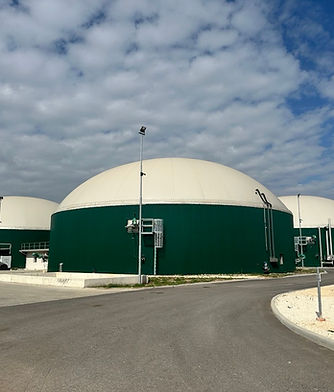
Installed within the anaerobic digester’s recirculation line, the SENTRY sensor delivers a high-frequency Volatile Fatty Acid (VFA) signal that acts as a real-time dashboard for the biological health of the methanogenic population. This granular visibility is critical for facilities navigating the complexities of co-digestion or variable organic loading, as it identifies the exact feed events that trigger foaming or metabolic inhibition before they escalate into a full process upset. By utilizing this data to safely push organic loading rates (OLR), operators can maximize biogas production and optimize retention times, effectively transforming the digester into a more profitable and resilient resource recovery asset.


DigesterSense use cases:
The SENTRY monitoring signal can be used to optimize biogas production while maximizing volatile solids destruction. By integrating our signal in your process control strategy, you can produce the most value from the digestion process.
When used as part of an advanced control strategy, our metabolic performance monitoring platform provides a unique measurement of biological activity that can be used to control pumps and valves and can simplify the design of feedstock mixtures to maximize key performance indicators.
.jpeg)


CarbonSense
Provides reliable, rbCOD or VFA from your anaerobic selector BNR or your optimized biological treatment process

By positioning a SENTRY sensor within the anaerobic selector, operators gain a direct, real-time proxy for readily biodegradable COD (rbCOD), allowing them to visualize the actual carbon availability required for Phosphorus-accumulating organisms (PAOs). This granular data enables the precise management of carbon inventory and the optimization of supplemental carbon dosing, ensuring that the selector maintains the ideal food-to-microorganism ratio without costly over-dosing. Ultimately, this proactive control loop stabilizes the fermentation process, leading to a more robust and reliable Biological Nutrient Removal (BNR) performance and consistently lower effluent phosphorus levels.

Biologic Process Monitoring

.png)

Pre-Treatment use cases:
Feed-forward control is becoming a reality leading to energy savings. It’s no secret that aeration is the largest energy use in water resource recovery facilities (WRRF) - often using 60-70% of total energy - but current best practices rely on backend control. We uniquely provide feed-forward actionable information in WWRFs that, combined with flow, is a surrogate for organic load. And we offer multiple control strategies that can be implemented leading to a 30% energy savings.
Many significant improvements in energy efficiency have been applied to WRRF operations in the past decade, including fine-bubble diffusers, high-speed turbo blowers, variable frequency drives, and improved dissolved oxygen control strategies. A factor that has limited further improvement is the lack of real-time data about the concentration of organic matter in the wastewater. We have now removed those limitations using our proven sensor platform and operating personnel now know the actual oxygen demand based on our sensor data and can respond in real time to changes to influent characteristics, like organic slug loads and toxic or inhibitory compounds.
As you’ve read so far, we uniquely provide a minute-by-minute signal that can be used to control equipment used in wastewater treatment processes. These signals can also adjust aeration and return solids flows in a feed-forward strategy to minimize aeration energy and reduce greenhouse gases like carbon dioxide and nitrous oxide.

